Mary T. McCarthy on Being a Loser

mary mccarthyOn Monday mornings, at recess, Nemesis exacted its price; we wretches all loyally “stuck together,” like pieces of melting candy in the linty recesses of a coat pocket. Mary McCarthy

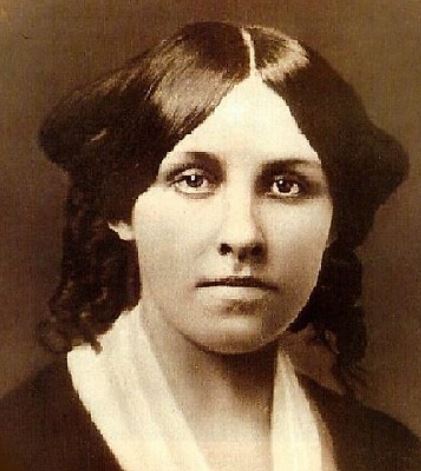
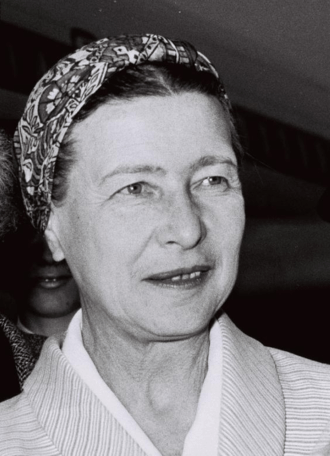
Mary McCarthy (1912-1984), satirist, critic, and award-winning fiction writer (two Guggenheim Fellowships and a National Medal for Literature), was placed in the Sacred Heart convent school in Seattle at the age of eleven. She recounted the difficulties of her early life in Memories of a Catholic Girlhood (1972), a memoir that has been called one of the “best of the genre.” It is warm and witty, sharp-tongued and polished, and still in print.  

In the following excerpt she doesn’t tell us how it felt she shows us what it’s like to be one of the wretches.

The beauty and poise of the middling and older girls were like nothing I had seen on earth. If not like angels, they were like the kings’ paramours I had read about in history or like Olympian goddesses, tall and swift of tread. Each of these paragons moved in an aureole of mysterious self-sufficiency, each had her pledged admirers among the younger and plainer girls, and disputes about them raged among us as though someone had thrown the apple of discord. In the intensity of the convent light, even a rather ordinary girl could acquire this penumbra of beauty, by gravity and dignity of person; it was a sort of calling, a still hearkening to inward voices, which brought a secret, cool smile to the lips of the one elected.

From the first, of course, I longed to become a member of this exquisite company, if only as a favored satellite or maid-in-waiting. But instead I stepped straight into that fatality that in every school awaits the newcomer who has not learned the first law of social dynamics: be suspicious of tenders of assistance. Around me, from the very first day, as I arranged my books on my desk, circled the rusty rejects of the system, hungry crows for friendship, copious with invitations, pointers, and sweets from home to be shared. Every school, every college, every factory has its complement of these miserable creatures, of whom I was soon to be one. No doubt they exist in Heaven, just inside the gate, peering over St. Peter’s shoulder for the advent of a new spirit, whom they can show the ropes; Hell must have them too, and if I were Dante, for example, knowing what I know today, I would have been a little bit more leery of Vergil and that guided tour. In any case I fell; I accepted with thanks those offers of aid and companionship. I learned the way to the refectory, how to fold my papers properly, how to stitch my collars and cuffs, how to pin my veil, and, in return, I found myself the doomed companion of girls with broad, flat faces and huge collections of freckles, girls with dandruff on their uniforms, with spots and gaping seams, wrinkled black stockings, chilblains, owllike glasses, carrot-colored hair– damp, confidential souls with quantities of younger brothers and sisters just like themselves. And I was one of them, too.

Have you ever been shut out from the in-group? How did it make you feel? How would you put it into words and show it to us?

Eleanor Munroe on My Mother, Amply Pregnant

eleanor monroeOn this Mother’s Day I ask us to think about our mothers, both real and fictive, and their role in our creative lives.

Eleanor Munroe is best known for her in depth studies of the relationship between artists and their art. In 1979 she wrote Originals: American Women Artists in which she brought a new perspective to the creation of art through intimate biographical interviews with women artists. She believed that “significant childhood memories” were key in the development of the imagination and artistic images.

In the introduction to Originals she wrote:  ”In recounting the trajectory of her life, the artist was consciously or unconsciously, looking to impress form onto a past tangle of conflicting impulses, to give their own version of the great myth by which artists and many other human beings live: that they were in some sense, “called” or “chosen,” graced with a special mission, and then set single mindedly upon the road to its fulfillment.”

Anyone who has been a creator – an artist, a writer, a composer, a choreographer, an inventor - understands that the creative process is messy. The ideas rattling around in one’s head  are a conglomeration of who we are at that moment of time – our present driven, passionate self. But if we look back later we can peel away the surface and find the child within us, and deeper still, the mother who formed that child who later grew up to be us – our mother who intentionally or unintentionally set us on our chosen road.

Eleanor Munroe in Memoir of a Modernist’s Daughter describes her mother and in doing so the reveals her own significant childhood memory .

Our father’s work and taste set us apart. But with our mother, the difference lay in what she was. Or was not. Which was it? I didn’t know, having never seen another female nonconformist. Was it her driving concentration on the piano, in the garden, the kitchen and the authoritarian way she sometimes marshaled us to do the same? Was it her frequent lamentation that she was so tired she was “dead”? Or that I was hanging on her, being a pest, whining for attention?  Or was it her occasional voluptuary self-indulgence, unlike the straightforward plainness of other mothers I knew? She had brought along to the new house little green perfume bottles, though now nearly empty, and when she dressed to go out, she went through the old pantomime of searching out a bit of scent. By now, her jewelry collection, made by my father, was elaborate and curious, consisting of ethnic or antique necklaces, brooches, bracelets. Her clothes, too,  were quietly theatrical, richly textured, in colors to point up her hair. Unusually, when she was carrying Elizabeth, she sometimes wore black, an evening dress of net spangled with tiny metallic stars. Amply pregnant, wrapped in that drifting galaxy, she was the most heavenly thing I had ever seen. And added to her appearance was some sense she always communicated that she was on the point of going away forever, or breathless from just having arrived – that her real place was somewhere else.

Therefore her medium, music, retained its unfathomably painful hold on me. As we would sit in the semi-darkness of a summer evening listening to records, slowly, as if the whole house became a diving bell, we sank together through the surface of things…

Once – if only I could remember the circumstances – mother burst out in the middle of some music, “I could die and be buried to that piece…,” and I swore never to forget what it was. And of course I have, for I have no musical memory at all.

Who was your mother? How would you describe her? Did she push you away or pull you in? Is she under your skin and in your creative life?

Anne Bradstreet on Offspring of My Feeble Brain

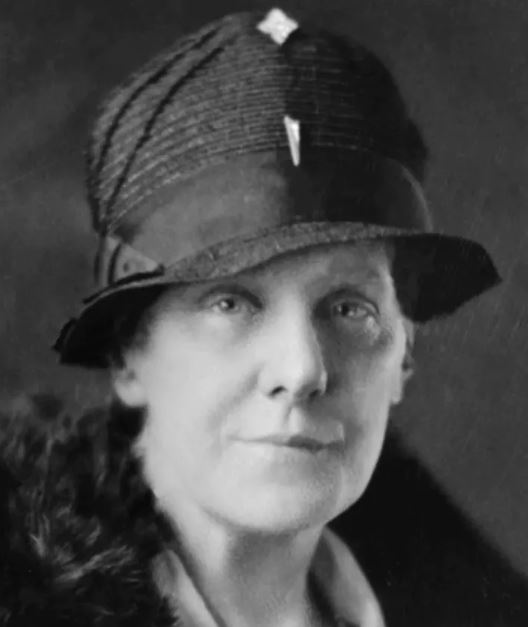
anne bradstreetHow would you feel if someone made copies of your private poems, carried them across the ocean, and unbeknownst to you published them in a book?

Anne Dudley Bradstreet arrived in the Massachusetts Bay Colony in 1630. She was among the first Puritans to settle in Salem, New England. A well-educated woman from a well-to-do background she found the boat crossing and the wretched living conditions in the colony unbearable. Her first home did not even have a table for eating or working. But she survived, found comfort in God and her beloved books, raised her eight children, and served her husband, whom she loved dearly.

Simon Bradstreet was Chief Administer of the Colony and later its last governor. He was often absent from home, traveling around the settlements on business. Lonely, Anne devoted herself to her reading and to writing poetry in private to be shared only with her family and close educated friends, such as Anna Hutchinson.

She had no intent to ever publish her work, since at the time, it was frowned upon for women to express their own views. However, in 1650 her brother-in-law, John Woodbridge, made copies of her poetry in secret, took them to England, and had them published under the title of The Tenth Muse Lately Sprung Up in America, By a Gentlewoman of Those Parts, making her the first published American poet.

Anne was horrified, as any writer would be if they had not intended their work for publication, but also a bit pleased, as we can see in the response she wrote about her “rambling brat.”

Thou ill-form’d offspring of my feeble brain,          

Who after birth did’st by my side remain,          

Till snatcht from thence by friends, less wise than true,          

Who thee abroad exposed to public view,          

Made thee in rags, halting to th’ press to trudge,          

Where errors were not lessened (all may judge).          

At thy return my blushing was not small,          

My rambling brat (in print) should mother call.          

I cast thee by as one unfit for light,          

The visage was so irksome in my sight,          

Yet being mine own, at length affection would          

Thy blemishes amend, if so I could.          

 I wash’d thy face, but more defects I saw,          

And rubbing off a spot, still made a flaw.          

I stretcht thy joints to make thee even feet,          

 Yet still thou run’st more hobbling than is meet.          

In better dress to trim thee was my mind,          

But nought save home-spun cloth, i’ th’ house I find.          

In this array, ‘mongst Vulgars mayst thou roam.          

In critic’s hands, beware thou dost not come,          

And take thy way where yet thou art not known.          

If for thy father askt, say, thou hadst none;          

And for thy mother, she alas is poor,          

Which caus’d her thus to send thee out of door. 

anne bradstreet cartoon

Rachel Carson on Agents of Death

 Rachel Carson“The beauty of the living world I was trying to save has always been uppermost in my mind – that, and anger at the senseless, brutish things that were being done. . . . Now I can believe I have at least helped a little.”

Today, as we remember Rachel Carson (1907-1964) in the context of Earth Day and caring for the ecological balance of our planet, many probably imagine a kind little woman who wrote beautifully about nature. However in her time, Rachel Carson was reviled and vilified because she dared attack the unfettered progress of big corporations and the government. The attacks on her were vicious. She was called a communist, peace-nut, a woman scared of bugs, a food faddist, and a fanatic defender of the cult of the balance of nature. A review in Time Magazine called her “unfair, one-sided, and hysterically overemphatic.” Hounded, she used the royalties from her book Silent Spring to buy a cottage on an island where she lived two years as she struggled with the breast cancer that eventually led to her death.

The following excerpt is from Chapter 3 of Silent Spring:

For the first time in human history, every human being is now subjected to contact with dangerous chemicals from the moment of conception until death. In the less than two decades of their use, the synthetic pesticides have been so thoroughly distributed throughout the animate and inanimate world that they occur virtually everywhere. They have been recovered from most of the major river systems and even from streams of groundwater flowing unseen through the earth. Residues of these chemicals linger in the soil to which they may have been applied dozen years before. They have entered and lodged in the bodies of fish, birds, reptiles, and domestic and wild animals so universally that scientists find it almost impossible to locate subjects free from such contamination. They have been found in fish in remote mountain lakes, in earthworms burrowing in soil, in the eggs of birds, and in man himself.

 Today, she is being vilified again for the role she played in making millions aware of human-caused environmental dangers. For example, Senator Colburne (R-Ok) blocked a bill naming the post office in her hometown after her. A December 2012 Forbes review says her junk science ideas would send us back to the Dark Ages.

It is interesting that even though she has been dead almost fifty years corporations still fear her words. What power in the pages of a book! Could it be they fear there’ll be more “Rachel Carsons” writing books that call them to account? After all the environmental problems are much, much worse today than in her day. We need more Rachel Carsons. So writers… here are some current news stories to inspire earth-shaking books. Which one will you choose to write about?

Eva Hoffman on Allergic to Words

eva hoffman 2I think every immigrant becomes an amateur anthropologist–you do notice things about the culture or world that you come into that people who grow up in it, who are very embedded in it, simply don’t notice.” Eva Hoffman

Eva Hoffman was uprooted from Poland in 1959 when she was fourteen and brought to Canada by her parents who were Holocaust survivors. Her memoir Lost in Translation written in 1989 captures the feeling of loss, dispossession, and inarticulateness immigrants experience when confronting a foreign culture.

A professor of literature and creative writing she has taught at numerous universities including Columbia, University of Minnesota, and Tufts. From 1979 to 1990 she was an editor and writer at the New York Times. She served as senior editor of the Times Book Review from 1982 to 1990. She has published non-fiction and fictional works. Some of her books include the nonfiction:  Exit into History, Stetl: The Life and Death of a Small Town, The World of Polish Jews, After Such Knowledge: Memory, History, and the Legacy of the Holocaust, and the novel The Secret. The following excerpt is from her memoir Lost in Translation.

Every day I learn new words, new expressions. I pick them up from school exercises, from conversations, from the books I take out of Vancouver’s well-lit, public library. There are some turns of phrase to which I develop strange allergies. “You’re welcome,” for example, strikes me as gaucherie, and I can hardly bring myself to say it–I suppose because it implies that there is something to be thanked for, which in Polish would be impolite. The very places where language is at its most conventional, where it should be most taken for granted, are the places where I feel the prick of artifice.

Then there are the words to which I take an equally irrational liking, for their sound, or just because I’m pleased to have deduced their meaning. Mainly they’re words I learn from books, like “enigmatic” or “insolent”–words that have only a literary value, that exist only as signs on the page.

But mostly, the problem is that the signifier has become severed from the signified. The words I learn now don’t stand for things in the same unquestioned way they did in my native tongue. “River” in Polish was a vital sound, energized with the essence of riverhood, of my rivers, of my being immersed in rivers. “River” in English is cold–a word without an aura. It has no accumulated associations for me, and it does not give off the radiating haze of connotation. It does not evoke .

What words are you allergic to?
What words have accumulated associations for you?

Judith Sargent Murray on the Female Mind

Judith Sargent Murray“What a censorious world says of me, cannot offend me or permanently hurt me. Was it to commend me, it would do me no real service…I’d rather have an unspotted conscience.”

Judith Sargent Murray (1751 to 1820) was the most prominent woman essayist of her time. She was also a poet, a playwright, and a novelist. Her play The Medium or The Tea-Party was the first play written by an American to be performed at Boston’s Federal Street Theater. Alhough her brother was well-educated she was like most women of her time mostly self-taught. She was an avid reader, and a “scribbler” of poetry from childhood. She was one of the early Unitarian Universalists and played a major role in the church, writing its first catechism. After her first husband died, she married John Murray, head of the Unitarians in Boston.

Under a pseudonym she wrote columns for local newspapers. As “The Gleaner” she wrote from a male perspective on numerous topics, such as citizenship and patriotism. The Gleaner essays were published in book form in 1798 and earned her a place as leading author of the period. John Adams and George Washington numbered among her readers.  

Her particular focus throughout her career was on female education and abilities. Her essay On the Equality of the Sexes was written in 1779 ten years before Mary Wollstonecraft’s Vindication of the Rights of Women, although not published in Boston until 1790. However, that was still two years before Wollstonecraft. The following except is from this essay:

Yes, ye lordly, ye haughty sex, our souls are by nature equal to yours, the same breath God animates, enlivens, and invigorates us; and that we are not fallen lower than yourselves, let those witness who have greatly towered above the various discouragements by which they have been so heavily oppressed; and though I am unacquainted with the list of celebrated characters on either side, yet from the observations I have made in the contracted circle in which I have moved, I dare confidently believe, that from the commencement of time to the present day, there hath been as many females, as males, who, by the mere force of natural powers, have merited the crown of applause; who, thus unassisted, have seized the wreath of fame. I know there are those who assert, that as the animal powers of the one sex are superior, of course their mental facilities also must be stronger; thus attributing strength of mind to the transient organization of this earth born tenement. But if this reasoning is just, man must be intent to yield the palm to many of the brute creation, since by not a few of his brethren of the field, he is far surpassed in bodily strength. Moreover, was this argument admitted, it would prove too much, for ocular demonstration evinceth, that there are many robust masculine ladies, and often effeminate gentlemen…Besides were we to grant that animal strength proved anything, taking into consideration the accustomed impartiality of nature, we should be induced to imagine that she had invested the female mind with superior strength as an equivalent for the bodily powers of man.

Unitarian Universalist Biography

The Sargent House Museum

Flannery O’Connor on Too Much Interpretation

Flannery1Flannery O’Connor (1925-1964) is best known for her short stories set in the South. Often about religious theme ,her stories are often humorous, but with a disturbing quality underneath that leaves the reader faintly puzzled and uneasy.

As a child she grew up in Savanna, Georgia, went to Catholic school, drew cartoons, and wrote stories. Later when she had to return home because of illness and live with her mother on her farm “Andalusia” she raised peacocks who liked to snatch cigarettes from people and eat them.  She wrote lovingly of the experience in the essay  “Living with a Peacock”. She was reticent and prickly according to her biographers, but a careful deliberate writer.

She developed lupus when she was 25, a serious debilitating illness that had killed her father and that eventually took her life at age 40. During that time she wrote three hours daily as she had done since she first studied writing no matter the pain. According to biographer Brad Gooch “[Near the end of her life] she was editing her final stories and hiding them under the pillow in the hospital from the doctors so that she could go on. She was still working on her last story after she had last rites. … All of that is a sort of [a] level of commitment that is startling and unmatched.”

The following is Flannery O’Connor’s response to an English professor’s letter to her concerning the meaning of her short story “A Good Man is Hard to Find” as interpreted by his students.


The interpretation of your ninety students and three teachers is fantastic and about as far from my intentions as it could get to be. If it were a legitimate interpretation, the story would be little more than a trick and its interest would be simply for abnormal psychology. I am not interested in abnormal psychology.

There is a change of tension from the first part of the story to the second where the Misfit enters, but this is no lessening of reality. This story is, of course, not meant to be realistic in the sense that it portrays the everyday doings of people in Georgia. It is stylized and its conventions are comic even though its meaning is serious.

Bailey’s only importance is as the Grandmother’s boy and the driver of the car. It is the Grandmother who first recognized the Misfit and who is most concerned with him throughout. The story is a duel of sorts between the Grandmother and her superficial beliefs and the Misfit’s more profoundly felt involvement with Christ’s action which set the world off balance for him.

The meaning of a story should go on expanding for the reader the more he thinks about it, but meaning cannot be captured in an interpretation. If teachers are in the habit of approaching a story as if it were a research problem for which any answer is believable so long as it is not obvious, then I think students will never learn to enjoy fiction. Too much interpretation is certainly worse than too little, and where feeling for a story is absent, theory will not supply it.

My tone is not meant to be obnoxious. I am in a state of shock.

Flannery O’Connor

This letter is excerpted from Letters of Note.

Flannery

Aphra Behn on Foppery

aphra behn“All women together ought to let flowers fall upon the tomb of Aphra Behn … for it was she who earned them the right to speak their minds.” Virginia Wolf

The first woman to make a living solely from her writing is Aphra Behn (1640-1689) who lived in the time of the English Restoration under Charles the 2nd. Her work Oooronoko about a slave in Suriname where she lived as a girl is considered one of the earliest novels. She wrote several novels, but is most famous for her witty, sexually provocative plays. Her most well-known play was The Rover (1688) which is still performed today. The following excerpt is from the opening of her novel the Fair Jilt or the Amours of Prince Tarquin and Miranda.

As love is the most noble and divine passion of the soul, so it is that to which we may justly attribute all the real satisfactions of life; and without it man is unfinished and unhappy.

There are a thousand things to be said of the advantages this generous passion brings to those, whose hearts are capable of receiving its soft impressions; for it is not every one that can be sensible of its tender touches. How many examples, from history and
observation, could I give of its wondrous power; nay, even to a degree of
transmigration!

How many idiots has it made wise! How many fools eloquent! How
many home-bred squires accomplished! How many cowards brave! And there is no sort of species of mankind on whom it cannot work some change and miracle, if it be a noble well-grounded passion, except on the fop in fashion, the hardened
incorrigible fop; so often wounded, but never reclaimed.

For still, by a dire mistake, conducted by vast opiniatrety, and a greater portion of self-love, than the rest of the race of man, he believes that affectation in his mien and dress, that mathematical movement, that formality in every action, that a face managed with care, and softened into ridicule, the languishing turn, the toss, and the back-shake of the periwig, is the direct way to the heart of the fine person he adores; and instead of curing love in his soul, serves only to advance his folly; and the more he is enamoured, the more industriously he assumes (every hour) the coxcomb.

These are Love’s playthings, a sort of animal with whom he sports; and whom he never wounds, but when he is in good humour, and always shoots laughing. It is the diversion of the little god, to see what a fluttering and bustle one of these sparks, new wounded, makes; to what fantastic fooleries he has recourse. The glass is every moment called to counsel, the valet consulted and plagued for new invention of dress, the footman and scrutore perpetually employed; billet-doux and madrigals take up all his mornings, till playtime in dressing, till night
in gazing; still, like a sun-flower, turned towards the beams of the fair eyes
of his Cadia, adjusting himself in the most amorous posture he can assume, his
hat under his arm, while the other hand is put carelessly into his bosom, as if
laid upon his panting heart; his head a little bent to one side, supported with
a world of cravat-string, which he takes mighty care not to put into disorder;
as one may guess by a never-failing and horrid stiffness in his neck; and if he
had any occasion to look aside, his whole body turns at the same time, for fear
the motion of the head alone should incommode the cravat or periwig. And
sometimes the glove is well managed, and the white hand displayed.

Thus, with a thousand other little motions and formalities, all in the common place or road of foppery, he takes infinite pains to show himself to the pit and boxes, a most accomplished ass.

Toni Morrison on Ritual and Writing

toni morrison

Nobel and Pulitzer prize-winning author Toni Morrison is known for her novels which explore the good, the evil, and the love in human souls. She has written numerous novels including The Bluest Eye (1970), Song of Solomon (1977), Beloved (1987), and most recently Home (2010). She has also written children’s books The Big Box and The Ant or The Grasshopper and an opera Margaret Garner. When one of her books was banned from a high school library she was editor for Ban this Book a collection of essays on censorship.

The following excerpt is from a Paris Review interview by Elissa Schapell, Fall 1993.


Recently I was talking to a writer who described something she did whenever she moved to her writing table. I don’t remember exactly what the gesture was—there is something on her desk that she touches before she hits the computer keyboard—but we began to talk about little rituals that one goes through before beginning to write. I, at first, thought I didn’t have a ritual, but then I remembered that I always get up and make a cup of coffee while it is still dark—it must be dark—and then I drink the coffee and watch the light come. And she said, Well, that’s a ritual. And I realized that for me this ritual comprises my preparation to enter a space that I can only call nonsecular . . . Writers all devise ways to approach that place where they expect to make the contact, where they become the conduit, or where they engage in this mysterious process. For me, light is the signal in the transition. It’s not being in the light, it’s being there before it arrives. It enables me, in some sense.

I tell my students one of the most important things they need to know is when they are their best, creatively. They need to ask themselves, What does the ideal room look like? Is there music? Is there silence? Is there chaos outside or is there serenity outside? What do I need in order to release my imagination?

Toni Morrison Society

An Evening with Toni Morrison

Helen J. Langer on Mindlessness

Helen J. LangerHelen J. Langer was the first woman to attain tenure in the psychology department at Harvard University. Langer is known for her edgy experiments into the power of the mind over the body and is considered a progenitor of the positive psychology movement. Langer’s experiments involve studying how people’s thinking and choices can physically change them. In one experiment she placed a group of old men living in a nursing home in a setting mirroring the period when they were young. At the end of a week their blood pressure was lower, did better on mazes, and on an intelligence test than a control group who did everything the same except imagine they were twenty years in their past.

Langer has written many books reporting on her studies. The following excerpt is from Mindfulness written in 1989, although it seems like a message so relevant for today.

A very different, but not incompatible, explanation for why we become mindless has to do with our early education. From kindergarten on, the focus of schooling is usually on goals rather than on the process by which they are achieved. This single-minded pursuit of one outcome or another, from tying shoelaces to getting into Harvard, makes it difficult to have a mindful attitude to life.

When children start a new activity with an outcome orientation, questions of “Can I?” or “What if I can’t do it?” are likely to predominate, creating an anxious preoccupation with success or failure rather than drawing on the child’s natural exuberant desire to explore. Instead of enjoying the color of the crayon, the designs on the paper, and a variety of possible shapes along the way, the child sets out about writing the “correct” letter A.

Throughout our lives, an outcome orientation in social situations can induce mindlessness. If we think we know how to handle a situation, we don’t feel a need to pay attention. If we respond to the situation as very familiar (a result, for example, of overlearning) we notice only the minimal clues necessary to carry out the proper scenario. If on the other hand, the situation is strange, we might be so preoccupied with thoughts of failure (“What if I make a fool of myself?”) that we miss nuances of our own and other’s behavior. In this sense we are mindless with respect to the immediate situation, although we maybe thinking quite actively about outcome-related results.

In contrast, a process orientation…asks “How do I do it?” instead of “Can I do it?” and thus directs attention toward defining the steps that are necessary on the way. This orientation can be characterized in terms of the guiding principle that there are no failures, only ineffective solutions. (pp. 33-34)

Learn more:

http://www.ellenlanger.com/